

For UK users in the high-stakes game show add button on homepage cash or crash live, a solid betting strategy is beyond just theory. It’s the foundation of responsible play. The game, with its digital rocket and rising multiplier that crashes at a unpredictable moment, puts to the test your nerve, timing, and planning. This guide transcends wishing for luck. It outlines practical frameworks to manage your money and determine when to cash out. We offer UK players a unambiguous, impartial look at tactics tailored to this specific game. This is always viewed through responsible gambling and the essential truth: the house always has its edge on every flight.
Comprehending the Core Mechanics of Cash or Crash Live
You need to grasp the game’s engine prior to building any strategy. Every round begins with a rocket launch. A multiplier begins at 1.00x and ticks upward. The wildcard is the “crash point”—the exact multiplier where the rocket explodes. A random number generator establishes this point the instant the round commences. That turns every game a independent, unpredictable event. Players set their bets before the launch. To win, you need to cash out before the rocket crashes, increasing your stake by the cash-out value. If you’re too slow and the rocket crashes first, you give up your bet for that round.
The game’s tension comes from this basic tug-of-war. You want the multiplier to climb for a bigger payout, but you risk losing everything if you wait too long. There’s no opponent to outsmart like in blackjack or poker. It’s just a random outcome and your own discipline. The live dealer brings a game-show feel, but they don’t change the maths. Realizing that each decision is a fresh event ruled by probability is the first, and most crucial, strategic step for anyone playing with real money consistently.
Modifying based on Table Trends and Game Statistics
While each round is independent, monitoring table stats and short-term trends may guide your tactics. It shouldn’t dictate them, nevertheless. The game screen normally shows the last few crash multipliers. A shrewd player might observe if the table hasn’t seen a high multiplier (like anything above 10x) in the past 20 rounds. This doesn’t make a high multiplier more likely next time. But it may convince you to use a slightly more aggressive cash-out on one single bet, as a planned exception. Treat this as a small tactical shift within your overall plan, not a fundamental change of course.
Also, knowing the game’s theoretical Return to Player (RTP) and multiplier spread is beneficial. Different game providers may have slightly different volatility settings. Some games may be configured to produce more frequent but lower multipliers. Others might have rarer but much higher crashes. Performing a bit of research or observation on your chosen Cash or Crash Live game’s profile can help you pick a strategy that matches. A high-volatility game is more suited with a conservative, frequent-cash-out plan. A lower-volatility game could enable you to aim for slightly higher targets without a massive jump in risk.
Popular Cash-Out Strategies and Their Analysis
Players of Crash-style games have come up with several organized cash-out methods. Let’s examine the most prevalent ones to understand their dangers and possible gains. Keep in mind, no method can beat the house edge over the long haul. But some can provide your play a framework and help limit your risk. Your decision often relies on your own appetite for risk and whether you desire lots of small wins or the infrequent bigger score. We’ll review a few primary approaches. Many gamers tweak or combine these concepts to suit their own style.
The Safe (Fixed Multiplier) Tactic
This is the easiest, least risky tactic. You select a set, small multiplier target—say, 1.50x—and you cash out every individual time the rocket hits it. The upside is reliability. You’ll secure a 50% profit on your stake frequently, accumulating your bankroll gradually and steadily. This method minimizes the times you are caught by a crash with no payout, since you’re not waiting for enormous multipliers. The downside is evident: you’ll miss the giant payouts from rockets that go to 5x, 10x, or beyond. That can be annoying. But for users who desire longer rounds and controlled growth, it delivers a distinct, emotion-free rulebook.
The Risky (Escalating Target) Plan
Operating at the opposite extreme, an risky strategy means letting the multiplier go much higher before you collect. A player may set a first objective of 5x, then, after a few low wins, let a bet ride to 10x. The big appeal is the opportunity for a major gain from one round. The danger is much greater, though. Many rockets will fail long before they hit those heights. This tactic can result to strings of losses then one large win. It requires a deep bankroll to survive the swings and steely resolve, so it’s not a good fit for most casual players.

The Paroli Method (Positive Progression) Adaptation
Taken from even-chance games like roulette, a Paroli system may be adjusted for Cash or Crash. The main principle is to increase your bet size after a win, attempting to exploit a “hot streak.” For example, after collecting at 2x, you could double your next bet. If you win again, you bank the profit and go back to your starting bet. This can enhance profits during a short period of successful cash-outs. The critical guideline is to begin again after a single loss or after a specific number of wins (like three in a row). The danger comes if you fail to reset. A loss after several higher bets can erase all your earlier gains.
Risk Handling: Hedging Techniques and Partial Withdrawals
Advanced play in Cash or Crash Live involves methods to control risk during a single session. The game interface typically has a “partial cash-out” feature, a strong tool for the tactical player. This allows you cash out part of your original bet while leaving the rest to ride on the rocket. For illustration, with a £2 bet, you might cash out £1 at 2x (guaranteeing a £1 profit) and allow the other £1 run risk-free. If the rocket then fails at 5x, you receive an extra £4 from the other part. If it explodes right after you cash out the first part, you break even instead of losing your full stake.
Hedging methods, by placing several bets, is a further thoughtful method. Some players place two bets at once: one with a conservative cash-out target and an additional with an bold target. This establishes a circumstance where you’re probable to win some amount from the cautious wager, which can compensate for a losses on the aggressive one. If both succeed, the profit is healthy. While these methods don’t alter the fundamental odds, they add a level of control. They let you secure profits and cut likely losses in real time. This aligns with a disciplined, strategic style for real-money betting.
Bankroll Management: The Foundation of Long-Term Play
If you take away one thing from this guide, let it be this: strict bankroll management is the essential strategy for Cash or Crash Live. This means setting aside a specific amount of money you can afford to lose for gambling, then dividing it into session budgets and bet sizes. Without this foundation, even the smartest cash-out tricks will fail. A conservative method is optimal. Your standard bet should be a tiny slice of your total bankroll—think 1% or 2%. This protects you from the losing runs that will happen and lets you ride out the swings without blowing your funds in a few rounds.
Imagine you have a £100 monthly bankroll. Your bet per round might be just £1 or £2. This discipline encourages you to treat betting as a session activity, not a frantic chase to recover losses. We can’t stress this enough: set hard limits for wins and losses before you click play. Decide you’ll stop if you lose 20% of your session budget. Likewise, decide you’ll walk away if you hit a 50% profit. This structure eliminates emotional choices when the adrenaline is pumping. It’s the way to playing responsibly while aiming for real-money results over time.
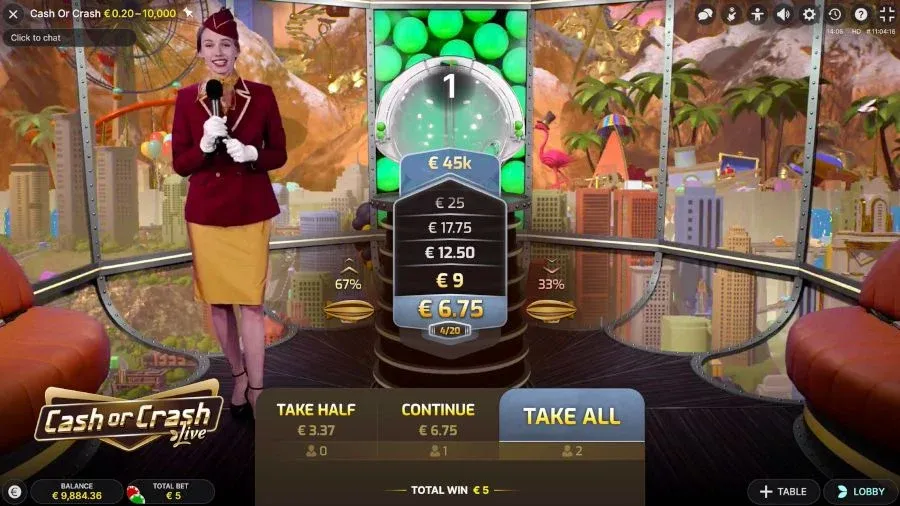
Setting Loss Limits and Win Goals
Pre-setting your exit points is a core part of managing your bankroll. A loss limit is the most you’re willing to drop in one session. When you hit it, you stop. No debate. A win goal is a realistic profit target where you’ll think about cashing out and ending the session. Make these goals relative to your session budget. Aiming for a 50% profit on a £20 session is sensible. Trying to double your money every time is a fast track to losing it all. Sticking to these pre-set limits is what distinguishes strategic play from reckless gambling.
The Calculated Approach: Probability vs. Mental Game
Adopting the right mindset represents a plan on its own. You must accept the statistical reality of Cash or Crash Live. Every round’s crash point is unpredictable and independent. The underlying algorithm sets the odds that a crash will occur at or before any given multiplier. No crash is ever “due”. A ship that just crashed at 2.00x isn’t any more or less likely to crash at 1.10x the very next round. This concept, known as event independence, trips up many players.. Trying to recoup losses by raising your stake after a loss, or believing a high multiplier is “overdue”, are blunders that can drain your funds rapidly.
Mental fortitude matters just as much. The game is designed to generate excitement and the fear of missing out as the multiplier rises. A disciplined player recognizes and combats these emotional cues. The aim is to act according to your pre-set plan, instead of reacting to the excitement or the live chat from other players. Maintaining a serene, almost objective stance on every spin lets you stick to your chosen cash-out plan. You will avoid being carried away by the natural ups and downs of the game show.
Essential Practices for the Discerning UK Player
Let’s integrate the strategic thinking with the practical side of playing for real money in the UK. This is a rundown of non-negotiable habits that underpin everything we’ve talked about. First, play exclusively at casinos licensed by the UK Gambling Commission that offer Cash or Crash Live. This guarantees fair play, proper RNG certification, and use of responsible gambling tools. Use these tools—deposit limits, time-outs, self-exclusion—as part of your overall strategy. Second, view your gambling budget as money for entertainment, not an investment or a job. The main aim should be enjoyment within what you can afford.
We advise keeping a playing log to track how you’re doing. Write down your session bankroll, bets, strategies used, results, and final profit or loss. Looking over this log every so often can reveal patterns. You might see you stray from your plan when you’re tired or after a big win. Finally, steer clear of chasing losses. If you hit your pre-set loss limit, stop. The game will still be there tomorrow. By mixing mathematical understanding, psychological discipline, and these concrete steps, UK players can handle Cash or Crash Live with a structured, strategic mindset. This maximises enjoyment while keeping play responsible.
- Employ solely funds you can afford to lose, strictly separated from essential finances.
- Establish and adhere to session time limits alongside monetary limits.
- Select your cash-out strategy before playing and document any planned deviations.
- Incorporate regular breaks to avoid fatigue-induced decision-making.
- Utilise the partial cash-out function to actively manage in-round risk.
- Examine your playing log monthly to assess strategy effectiveness and emotional discipline.


